
Sburb Game Mechanics
Within the game of Sburb, there are a lot of different features and game mechanics which shape the events of the comic, due to the nature of Sburb as a game which impacts the real life of the characters who play it. These game mechanics are in every iteration of Sburb, but the ways in which they’re used are unique to every player.Classpects ==>
Classpects are a little bit like Harry Potter houses, in the sense that they are a label used to categorize characters based off of their personality traits, except classpects are a lot more varied and complicated. Also, a classpect functions more as a description of a character arc rather than of that character’s personality as a whole, which is why it doesn’t work all that great for real people. However, they’re really fun!
A character’s classpect is made up of two parts: their class and their aspect. Every player in Sburb has a classpect, which reads as [class] of [aspect]. For example, Knight of Time or Witch of Space. If a character properly completes their intended character arc and dies on their “quest bed” [every player also has a quest bed, which is usually located somewhere on their Land], they are resurrected anew. This resurrection is called god tiering, and characters who god tier gain powers related to their classpect, their designated classpect’s costume, and conditional immortality [they can only die if their death is either “heroic” (dying valiantly in battle, for example) or “just” (if they are slain for being evil). Essentially, their death must serve as a satisfying conclusion—they can’t die for no reason].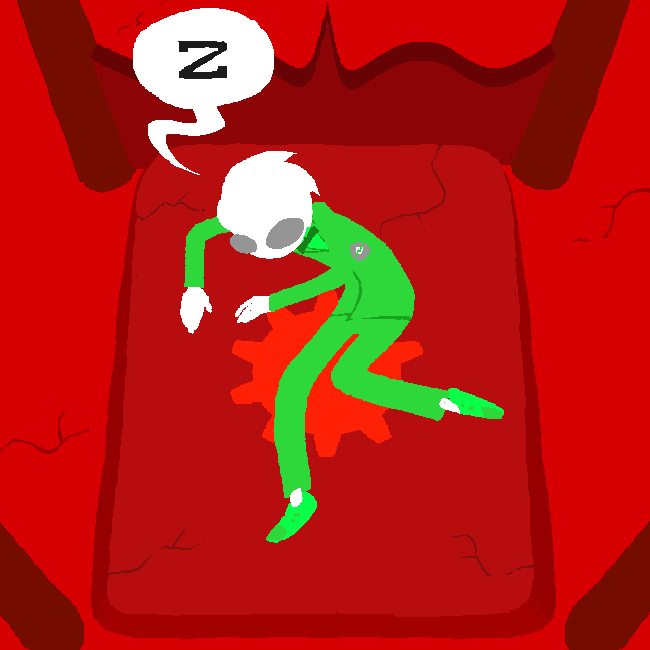

Aspects are the simpler of the halves, describing the element that this character “wields” if they god tier. For example, because Dave’s aspect is Time, he is able to time travel after he god tiers. In Homestuck, there are twelve possible aspects: Space, Time, Mind, Heart, Hope, Rage, Breath, Blood, Life, Doom, Light, and Void. A character’s aspect not only describes their powers, but also relates to a character’s personality traits or interests. For example, Dave’s aspect is Time because he makes music (a time-based art) and he collects old, dead things (from the past). Jade’s aspect, Space represents both creativity and loneliness, because she is very innovative (drawing, engineering) but also grew up isolated. Additionally, in order for a session of Sburb to be successful, there must be at least one Time player and one Space player, in order to breed the Genesis Frog.
Classes describe how a character wields their aspect. For example, Knights use their aspect to protect others. As a Knight of Time, Dave Strider uses his powers to travel back in time in order to save John from death, at one point in the comic. There are two different types of classes: active(-) and passive(+) (yes, the +/- values feel backwards. Thank Andrew Hussie.) Players with active(-) classes use their aspect directly, and often more for their own benefit, while players with passive(+) classes operate on a basis where they are moreso impacted by their aspect or use it indirectly, and often to the benefit of others. The passive/active dichotomy is a scale, with each class given a numerical value equivalent to the intensity to which that class is active(-) or passive(+). For example, the master class Lord is the most active(-) with a value of (-7), while it’s counterpart, Muse, is the most passive(+), with a value of (+7). The classes are paired as follows (hover over for individual roles):
Mage(-2) / Seer(+2)
Knight(-3) / Page(+3)
Thief (-4) / Rogue(+4)
Prince(-5) / Bard(+5)
Witch(-6) / Sylph(-1)
Maid(+1) / Heir(+6)
Lord(-7) / Muse(+7) *These are the two master classes
Certain classes are supposedly gendered (for example, Princes are “male-exclusive” while Muses are "female-exclusive"), however, the canonicity of this within the game of Sburb is ambiguous.
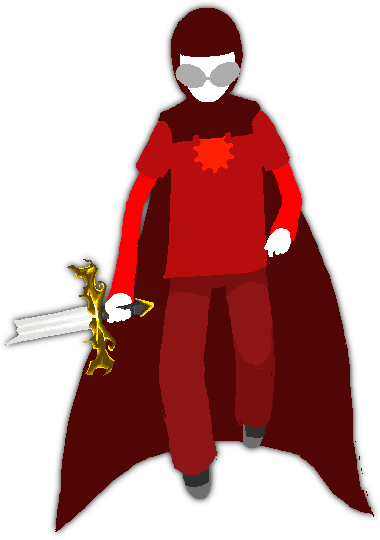
Additionally, remember that god tier outfit I mentioned earlier? Well, classes determine the outfit you wear after god tiering, while aspects determine the color and symbol. I won’t show every outfit, but here are a few: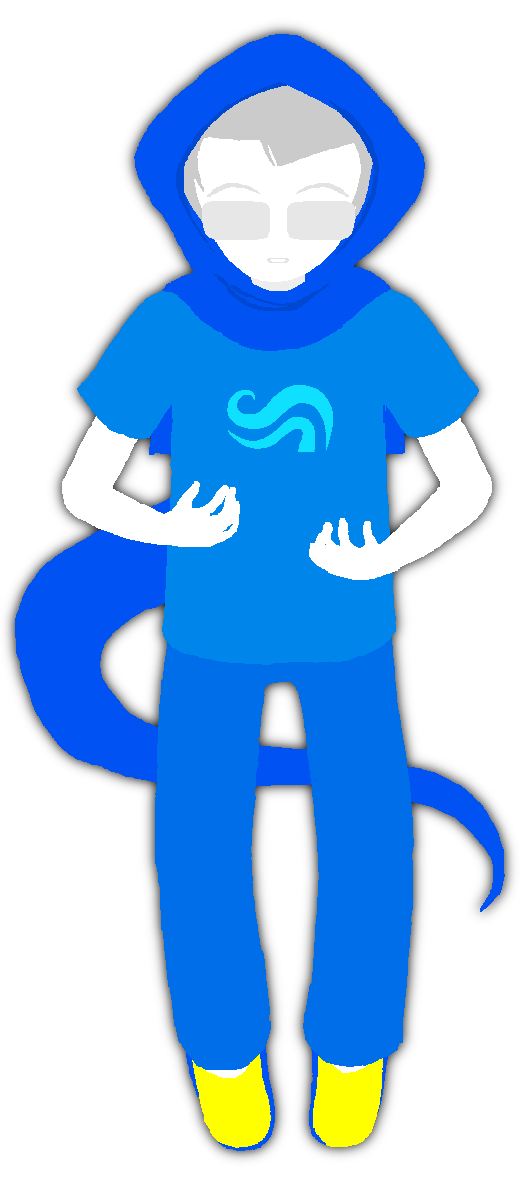
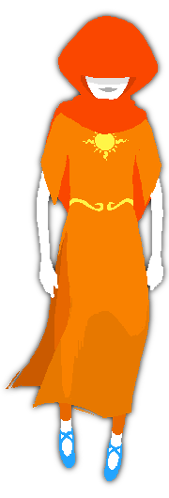
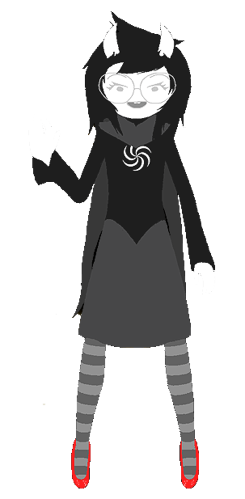
And that's classpects! If any of this seems confusing, unnecessarily complicated, or inconsistent (especially with the classes), don’t worry, that's just how Homestuck is. Classpecting yourself can be hard, especially with how ambiguous the process is. Instead, let's look at a few examples of classpects in Homestuck that I find particularly interesting.Dirk Strider
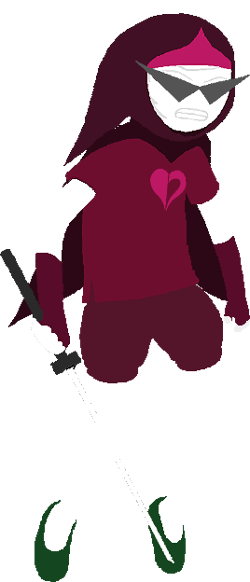 Dirk’s classpect is Prince of Heart, which translates to one who destroys emotions/personal identity/narratives. How does this work in Homestuck?
Well, first of all Dirk is the “heart” of his friend group (the alpha kids: Jane, Roxy, and Jake), and one source of conflict within their friend group is that both Roxy and Jake have feelings for Dirk. Dirk, with his faux emotionless, sardonic attitude tends to hurt people’s feelings easily (destroying emotions).
Additionally, Dirk has a very fragmented sense of self. There are multiple “versions” of Dirk within the comic: regular Dirk, beta-timeline Dirk (aka Dave’s older brother, Bro), Lil Hal (an AI of Dirk’s consciousness from when he was 13), Brain Ghost Dirk (self-explanatory), Brobot (a robot version of Dirk that he sent to Jake). He also has a lot of self-hatred. All of this exists to suggest that Dirk as a character has a destroyed personal identity.
In the post-canon I believe all of Dirk’s fragments combine to create some kind of Ultimate Dirk, which then sets out to destroy the narrative? But I don’t care about the post-canon stuff beyond Pesterquest so I’m only putting this here to show that Dirk’s classpect also lends him to destroying the narrative.Karkat Vantas
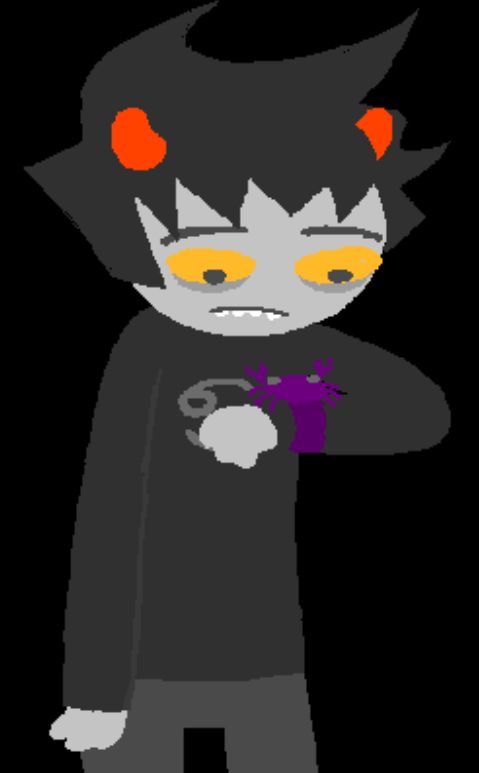 While Karkat never god tiers, his classpect is Knight of Blood, which directly translates to one who applies or utilizes friendships/leadership/
determination. Because Karkat never achieved god tier, he never fully realizes these powers, but we can still see the inchoate application of them throughout the story. Additionally, because Karkat has a mutant blood color (which is a death sentence on his planet) he is very guarded and ashamed about the color of his blood. Knights as a class are typically pretty guarded and hide parts of themselves with some kind front (for Karkat this manifests as being angry and uncooperative to cover up his insecurities). This translates very directly to his classpect as a literal knight/protector of his blood.
Despite his tough exterior, Karkat actually cares a lot about his friends and the success of the trolls’ Sburb session. While a fully realized Knight of Blood may be able to utilize their relationships with other people in order to drive the success of their session, Karkat’s disagreeable and stubborn attitude fails to achieve his goal of bringing their team together; he tries very hard to bring his friends together under a common goal, but his plans always fall short.
This also leads into his attempts to lead the trolls during their session. He claims to be the leader and fights to try and command people to do as he says, but they usually don’t listen. He more often devolves into yelling and going on long-winded rants that people tend to tune out.
Karkat definitely fulfills the “determination” side of his aspect, but a better word would probably be stubbornness. Karkat is incredibly hotheaded and kind of stuck in his ways. Rather than properly applying this as a type of unstoppable commitment to achieving his goals, it acts as more of a barrier preventing him from making an actual impact.